


Aggregators and Charter Obligations: Who Answers When Something Goes Wrong

An aggregator shows you forty offers for one date. You choose, pay, and get a confirmation.
Then at the desk it turns out the car is a different trim. Or the deposit is twice what you expected. Or they won’t release the vehicle without insurance that wasn’t in the quote.
And here’s the question worth asking in advance: who exactly is your contract with?
First, what aggregators do well
An analysis where one side has only drawbacks is worth nothing. So let’s start honestly.
Aggregators solved a real problem. Before them, comparing prices across rental companies meant phoning ten of them and writing it down. Now it’s one screen.
They brought price transparency to the market. An operator can no longer quote an arriving visitor an arbitrary figure — the price for the same thing next door is visible alongside.
They gathered reviews in one place. A company with systematic problems drops down the platform’s rankings, and that’s a functioning discipline mechanism.
They’re convenient. One interface, one payment, a clear cancellation procedure.
All of that is true, and for someone landing in an unfamiliar country for the first time an aggregator is genuinely useful. The question isn’t whether to use one. The question is what exactly it guarantees you, and what it doesn’t.
Where the line of responsibility runs
An aggregator is an intermediary. It connects you with an operator and takes a commission for it. The car, the contract, the vehicle’s condition, the deposit terms and the conduct of the person at the desk are the operator’s domain.
That isn’t a criticism of the platform. It’s how the model works: an intermediary physically cannot answer for the technical condition of a car it has never seen.
The problem arises when the customer doesn’t grasp this. They booked on a familiar site with ratings and reviews — and expect that site to resolve their problem.
| Question | Who answers |
|---|---|
| Price displayed correctly | Platform and operator jointly |
| Car matches the stated class | Operator |
| Technical condition and servicing | Operator |
| Contract terms and deposit retention list | Operator |
| Photographic inspection report at handover | Operator |
| Insurance cover on the vehicle | Operator |
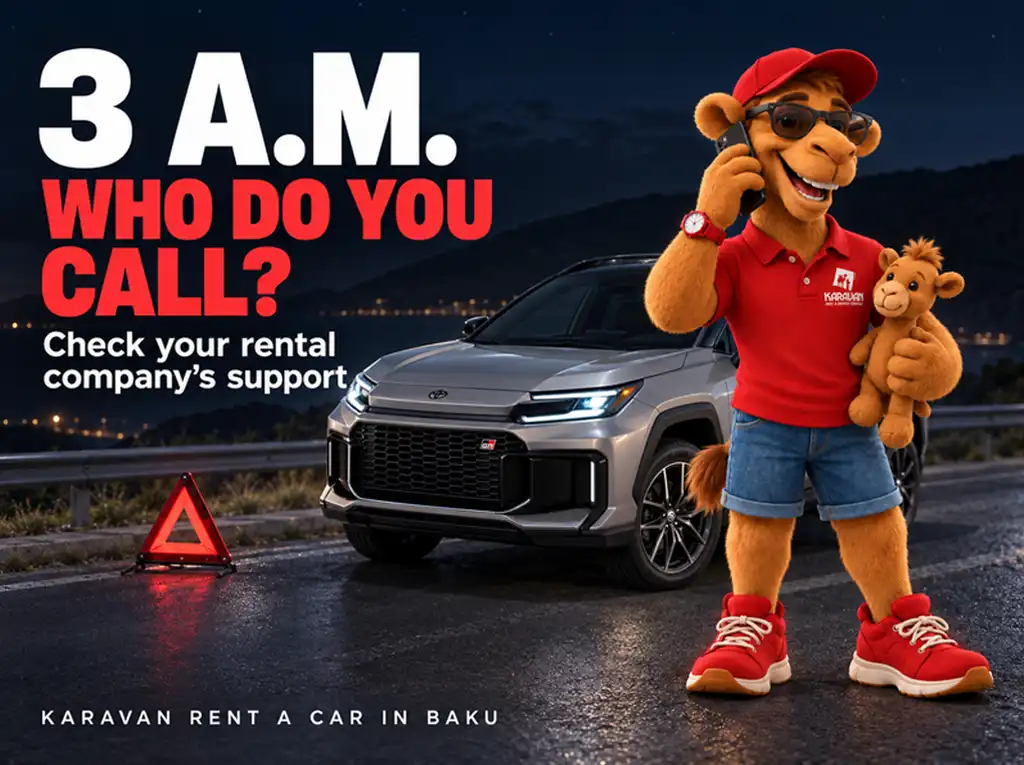
| Support at 3 a.m. after a breakdown | Operator |
| Return of the deposit | Operator |
| Refund of prepayment on cancellation | Platform |
Seven of nine lines sit with the operator. That’s precisely why the question “which company will actually hand me the car” matters more than “which site am I booking on.”
What this means in relation to the charter
The Association of Car Rental Companies of Azerbaijan (ACRA) sets eight mandatory criteria for its members: legal registration, fleet technical condition, a transparent contract, a photographic inspection report, minimum CDW + TPL insurance cover, an exhaustive list of grounds for retaining the deposit, 24/7 support, and fleet environmental records.
The key point, rarely stated plainly: these obligations sit with the operator. The association brings together rental companies — the ones that own the vehicles and sign the contracts. An intermediary platform isn’t a member and doesn’t take on any of those obligations.
The practical consequence follows. Booking through an aggregator, you get the platform’s guarantees for its own part — accurate display and refund of prepayment. Your guarantees on the car, the contract and the deposit come in exactly the measure the specific operator named in your confirmation provides them.
If that operator is an association member, the eight criteria apply. If not, they don’t — however solid the site you booked on looked.
Three situations where the difference shows
The car breaks down on a Sunday evening a hundred kilometres from Baku. You call the operator, not the platform. Whether there’s round-the-clock support and a replacement vehicle depends on them. The charter requires it of members; nobody requires it of anyone else.
At return you’re presented with a scratch you didn’t make. The dispute turns on the photographic inspection report made at handover. If one was made, proving your case is easy. If not, it’s close to impossible. The aggregator isn’t a party to that dispute.
The deposit hasn’t come back after a month. The operator holds it. The platform can help by leaning on its partner, but it isn’t the one holding the money.
How to use an aggregator sensibly
The practical part — without it the piece would be useless.
Look at which company is named in the confirmation. Not the platform’s name, the operator’s. That’s the first thing to know.
Check that operator separately. Do they have a website, a registered address, a support line, reviews outside the platform. Five minutes of work.
Request the contract terms before the trip. Not from the aggregator — from the operator directly. Willingness to send a sample tells you more about a company than its rating.
Clarify three figures: the deposit amount, the full list of grounds for retaining it, and what the insurance covers. If those answers come back vague, you’ve learned the main thing.
Keep the correspondence and the booking confirmation. In a dispute about what you were promised, that’s the only evidence.

The position that follows from the charter
The association isn’t opposed to aggregators. The intermediary model is legal, convenient, and brought price transparency to the market — denying that would be dishonest.
But one thing follows from the charter and is worth stating plainly: obligations to the customer are carried by whoever hands over the car. Not by whoever showed the listing. And so it’s the operator you need to check.
That’s exactly what the White List exists for — a register of companies that have taken on eight obligations and undergo annual verification. It answers not “where is it cheaper” but “who will my contract be with, and what does that party guarantee.”
How we work
Karavan Rent A Car in Baku is an operator. We own the fleet and contract with you directly, so we answer for everything assigned to the operator in the table above.
Booking: 20% prepayment plus photographs of your passport and licence, then a voucher with the sum fixed. The balance is paid at collection.
The price includes official insurance, regular servicing, passing technical inspection, the equipment the traffic police require, and round-the-clock support with a replacement vehicle for faults not caused by the client.
The deposit is returned in cash immediately on return of the vehicle, or to a card within 30 days. Separately: rental cars do not cross Azerbaijan’s state border.
We send a sample contract before arrival, on request in the chat.
FAQ
Is booking through an aggregator risky?
No. But it matters to understand that your contract is with the operator, not the platform. It’s the party handing over the car that needs checking.
Who refunds my money if I cancel?
Prepayment made on the platform is refunded by the platform under its own rules. The deposit and contract settlements are the operator’s domain.
Who answers if the car turns out to be a different class?
The operator. They provide the vehicle and sign the handover report. The platform may mediate in a dispute, but the obligation isn’t theirs.
Do ACRA charter criteria apply to aggregators?
No. The association brings together rental companies. The obligations are carried by member operators, not by intermediary platforms.
How do I find out whether an operator is an association member?
Check the company against the White List — the register of members meeting the eight mandatory criteria.
What if the terms at the desk differ from the booking?
Ask them to show where that condition appeared at the time of booking. If it wasn’t there, you’re entitled to be charged on the confirmed terms. A saved confirmation decides everything here.
Conclusion
The aggregator answers for the shop window. The operator answers for the car, the contract and everything that happens after signing.
That’s no reason to avoid aggregators. It’s a reason to spend five minutes checking the company named in your booking confirmation — because that’s who you’ll be talking to if anything goes wrong.
Booking questions direct to Karavan Rent A Car in Baku’s official chat on WhatsApp or Telegram: +994-55-455-22-45.
More in this section
- The price disclosure standard: what the rate must include: read the article
- How a corporate client vets a car rental company: read the article
- The Charter of the Association of Car Rental Companies of Azerbaijan: read the article