


Business Etiquette in Baku: Which Car to Meet Partners In So the Deal Actually Happens

Azerbaijani business is intensely sensitive to status: who greets whom first, who enters the room first, who sits at the head of the table — all of it gets read instantly and without a word said. Business guides to the country are blunt about it: if you want to show how much you value a partnership, send your most senior person to the meeting, because that level of attention is what actually registers here. The logic doesn’t stop at the boardroom door. The car you arrive in to meet a partner, or send to collect a colleague from the airport, sends exactly the same signal — just a nonverbal one.
Short version: the car’s class should roughly match the seniority of the person you’re meeting and the nature of the occasion. For routine work trips around the city, a business-class sedan is plenty. For a first meeting with a key partner, or picking up a VIP delegation at the airport, a premium crossover or a representative-level minivan. Mismatch it either way — too modest or too extravagant — and it reads as a misjudgment of the situation.
Why this actually matters in Azerbaijan
Azerbaijani business culture runs on personal relationships and hierarchy more heavily than most Western business environments. Business guides to the country consistently note that decisions rest with one person at the top, and who exactly you send to a meeting — an intern or a director — tells your partner, directly, how seriously you’re taking the deal. A first meeting often looks more like getting acquainted over tea than negotiating: family, company history, mutual connections come up before business does. In that framework, external details function as a language spoken before the first business sentence is uttered.
The car is exactly that kind of detail, on par with a suit or who extends a hand first. It won’t close the deal by itself, but it sets the tone everything after it gets heard through.
Who you’re meeting, and why hierarchy decides the answer
The practical rule is simple: the car’s class should match the seniority of the person you’re meeting, not your own rental budget. If the founder of your partner company is landing in Baku, an economy sedan at the airport creates dissonance before the handshake even happens. If you’re meeting a mid-level manager for a routine site visit, an overly lavish car can read as an odd, misjudged display rather than respect.
The second detail is who’s driving. If you show up in person to meet the partner rather than sending a driver, that’s already a strong gesture in itself: in a culture where status is read through attention and personal involvement, the fact that you came yourself rather than delegating it carries at least as much weight as the make of the car.
Which car class for which occasion
For everyday work trips and meetings around the city, a business-class sedan. It’s status-appropriate for a business context, doesn’t look excessive for a routine meeting, and is comfortable for short city trips.
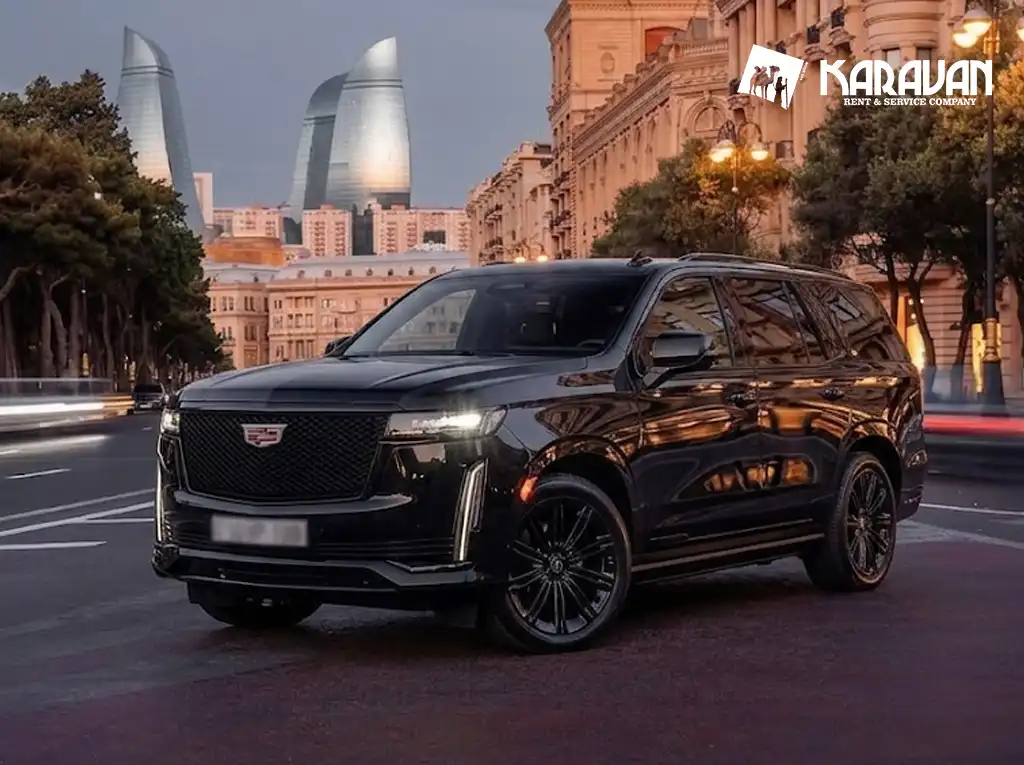
For a first meeting with a key partner — especially if you’re driving out of town or showing off an office or a production site — a premium crossover or SUV, like a Toyota Land Cruiser Prado. That kind of vehicle is equally at home in a business district and on the highway, and the higher seating position and roomy cabin give your partner a physical comfort that reads as genuine attentiveness — and attentiveness to a guest carries real weight in Azerbaijani business culture.
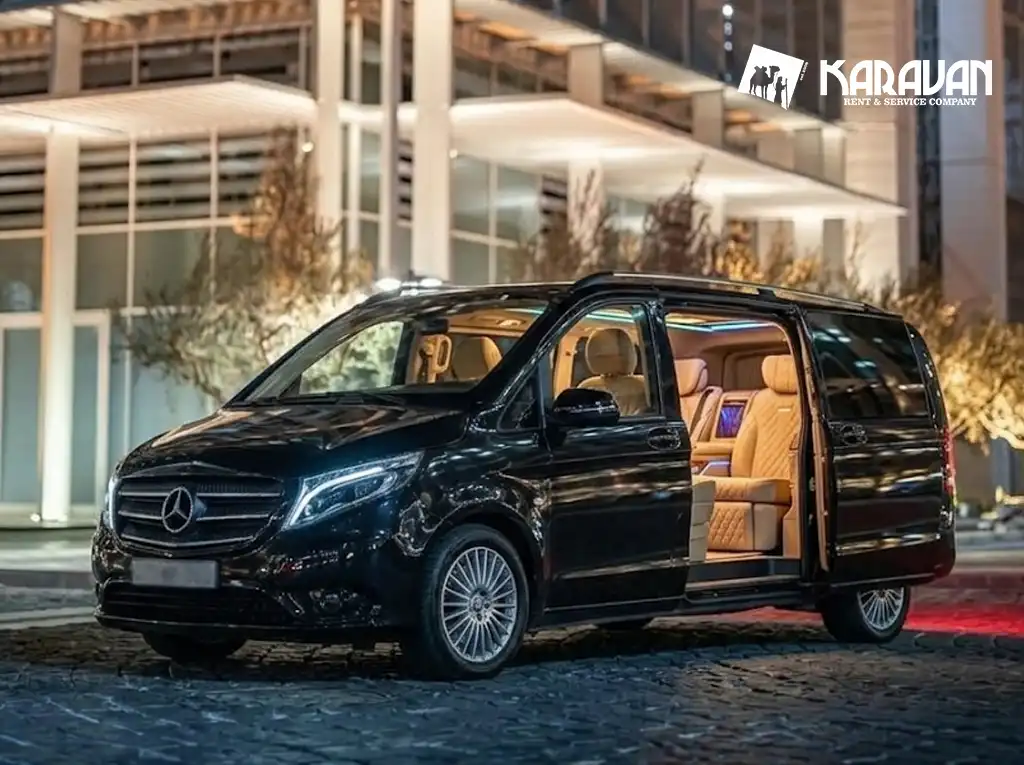
For meeting a VIP delegation at the airport, or moving several people at once, a representative-level minivan, the Mercedes-Benz V-Class. That’s exactly the class of vehicle DMC companies and VIP services in Baku actually use for transfers of senior figures from Heydar Aliyev Airport — not a random pick, but an established practice for precisely this scenario.
The back-right-seat rule — and when to break it
In the business protocol of many countries, the seat behind the front passenger is considered the seat of honor — reserved for the most senior guest. Azerbaijan, for all its sensitivity to hierarchy, doesn’t have a rigid protocol on this specific point, but the broader principle of letting the guest choose first works every time. Practical tip: open the door and step back slightly, letting your partner decide where to sit — this works better than any memorized rule, because it demonstrates exactly the kind of attentiveness that’s valued here.
If it’s you, a driver, and one guest, the least contentious arrangement is the guest in the back, with you either up front or in the back as well, leaving the guest their choice of diagonal seat.
The driver as part of the impression
If someone else is driving rather than you, that’s part of the overall picture too. Punctuality in Azerbaijan is fairly flexible for social occasions, but for a business meeting, being late reads as disrespect, not a cultural quirk. The car should be there ahead of time, clean, full tank, and the driver should be prepared to open the door for the guest, not just park and wait.
A small thing that actually matters: if your guest is in Baku for the first time, a couple of welcoming words from the driver on the way — a greeting, pointing out landmarks — is a small gesture, but in a culture where hospitality is central even in a business context, it doesn’t go unnoticed.
“We regularly prep cars specifically for meeting business partners — and the difference between ‘just grab something for a couple of days’ and ‘choose the right car for this specific meeting’ shows immediately. Clients who get the car class right for their guest’s level tend to tell us afterward that the first meeting went noticeably warmer,” says the service team at Karavan Rent A Car in Baku.
FAQ
Do I need a premium car for every business meeting?
No — for routine work visits, a business-class sedan looks entirely appropriate. Premium class makes sense specifically for first meetings and VIP scenarios, where a mismatch stands out more.
What if the budget is limited but the meeting matters?
A clean, well-maintained mid-range car looks better than the generic idea of “prestige.” A scruffy premium car makes a worse impression than a tidy sedan.
Should I tell my partner in advance which car I’ll be arriving in?
Not strictly necessary, but if you’re meeting someone at the airport for the first time, it helps to send the make, color, and the driver’s phone number (if it’s not you) ahead of time — it takes the edge off the waiting for a guest who’s just landed.
Does it matter if the partner is a woman?
The general principles of business courtesy in Azerbaijan apply regardless of gender: status and the nature of the meeting determine the car class, not the guest’s gender.
How far in advance should I book a car for an important meeting?
Earlier rather than later — a few days ahead. Premium models in a given class get booked up faster, especially in high season, and a last-minute choice can end up limited to whatever’s left.
Conclusion
In a business culture where status is read before the first word is spoken, the car isn’t a minor logistics detail — it’s part of the negotiation. The right car class for the occasion, a clean car that shows up on time, and the willingness to meet your partner in person: simple things that add up to a first impression, and in Azerbaijan, that first impression sets the tone for everything that follows. We’ve operated since 2008, chair ACRA, carry ISO 9001:2015, 14001:2015, and 45001:2018 (Bureau Veritas), and hold a 5.0-out-of-5 rating across more than 5,000 reviews on Google, Yandex, TripAdvisor, and 2GIS.
Message us on WhatsApp or Telegram at +994-55-455-22-45, tell us about the meeting, and we’ll help you pick the right car class and have it ready before you land.